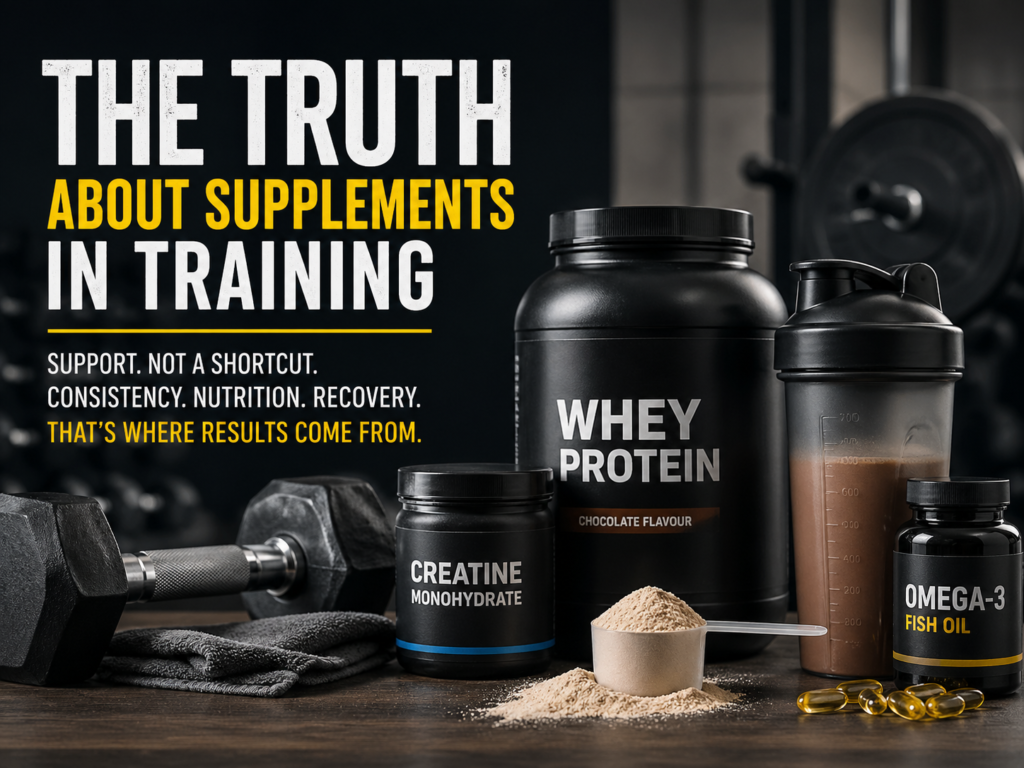
Walk into any gym today and you’ll see it everywhere—shakers, tubs, capsules, powders. Supplements have become almost inseparable from training culture, often presented as the missing piece between effort and results. For many, it feels as though progress depends not just on what you do in the gym, but on what you take alongside it. But the reality is far less dramatic, and far more grounded in fundamentals.
At its core, training is driven by consistency, nutrition, and recovery. These are the foundations that determine whether you progress or stall. Supplements sit outside of that core. They can support what you’re already doing, but they don’t replace it. Without the basics in place—regular training, adequate calories, balanced nutrition, and proper rest—no supplement is going to create meaningful change.
What Supplements Actually Do
Most supplements are designed to fill gaps or provide small performance advantages. Protein powders help increase daily protein intake when it’s difficult to meet through food alone. Creatine supports strength and power output by improving the availability of energy during short bursts of effort. Caffeine, often included in pre-workouts, can enhance focus and reduce the perception of fatigue.
These effects are real, but they are incremental. They might help you lift slightly more, recover slightly better, or stay more consistent with your nutrition. Over time, those small improvements can add up—but they only matter if everything else is already working.
The Expectation Gap
One of the biggest issues with supplements is the expectation placed on them. Marketing often presents them as transformative, suggesting rapid changes in strength, size, or endurance. This creates a gap between what people expect and what actually happens. When results don’t match the promise, it can lead to frustration or the assumption that something else needs to be added.
In reality, progress in training is gradual. It comes from repeated effort over time, not from a single product. Supplements don’t accelerate that process dramatically—they simply support it at the margins.
Where They Can Be Useful
There are situations where supplements make practical sense. Busy schedules can make it difficult to prepare balanced meals, and a protein shake can be a convenient way to maintain intake. Creatine is one of the most researched and reliable supplements available, offering consistent benefits for strength-based training. For those training early in the morning or after long days, a small dose of caffeine can improve focus and performance.
Used this way, supplements act as tools rather than solutions. They fill gaps, support routines, and make consistency easier to maintain. They are most effective when they simplify things, not complicate them.
The Risk of Overreliance
The problem arises when supplements become the focus rather than the support. It’s easy to fall into the trap of thinking that adding another product will solve a plateau or improve results. In most cases, the answer lies elsewhere—in training structure, nutrition, or recovery habits.
Overreliance can also lead to unnecessary expense. It’s possible to build an effective routine around a small number of well-understood supplements, rather than constantly chasing new products. The difference in results is often minimal, but the difference in cost can be significant.
Keeping It Simple
For most people, a simple approach works best. Prioritise training consistency, eat well, and ensure adequate rest. If supplements are added, they should have a clear purpose—supporting protein intake, improving performance, or aiding recovery—not acting as a replacement for the basics.
When viewed in that context, supplements become what they were always meant to be: an addition, not a foundation. They can help, but they are not the reason progress happens.
Final Thoughts
Training results are built over time through effort and consistency. Supplements can support that process, but they don’t define it. Understanding their role—what they can and can’t do—allows you to use them effectively without relying on them. In the end, progress comes from what you do every day, not what you add on top of it.