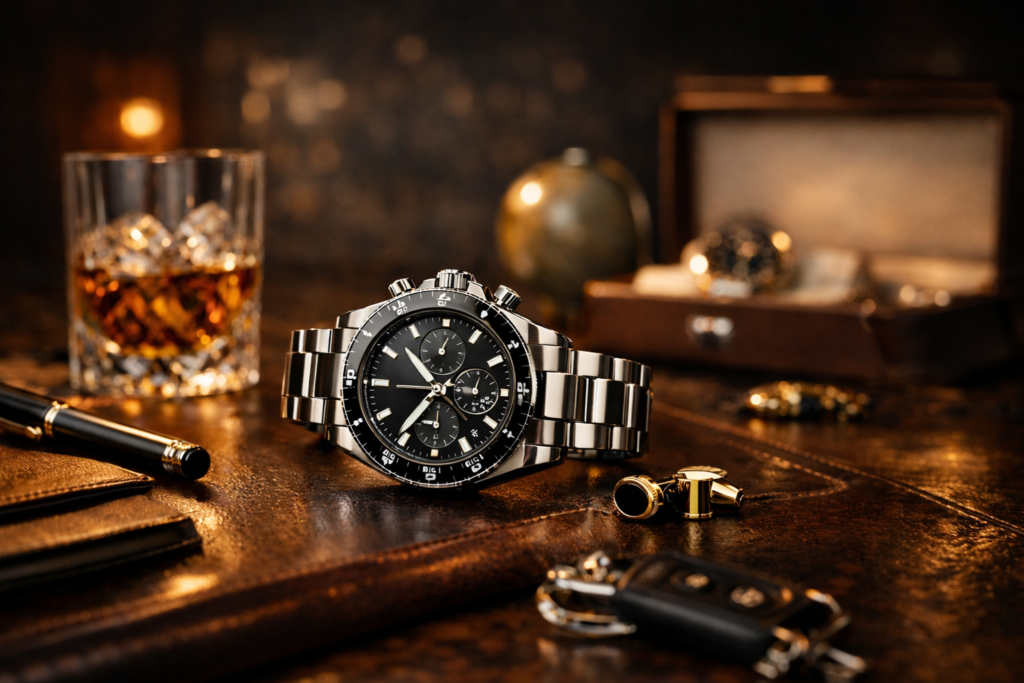
We’ve all stood there at some point—looking through the glass of a boutique window at a watch that costs more than a car. The story sells itself: heritage, craftsmanship, precision, legacy. It feels justified in the moment, as though the price reflects something tangible. But when you step back and separate emotion from reality, a different picture starts to emerge. The truth is, what you’re buying isn’t just a watch—it’s a brand, and more specifically, the cost of that brand’s image.
The Reality Behind the Price
Strip a luxury watch back to its core components and the reality becomes clearer. Whether it’s a diver, a chronograph, or a dress watch, the fundamentals are the same: a case, a movement, a crystal, and a strap or bracelet. In 2026, manufacturing has reached a level where producing high-quality components is no longer rare or expensive at scale. A 316L stainless steel case—the same material used across most “luxury” brands—can be produced with exceptional precision for a fraction of what people assume. Even the movements, often positioned as the heart of exclusivity, are frequently sourced from established suppliers like ETA or Sellita, built in large volumes and capable of delivering excellent accuracy.
The Illusion of “In-House” Superiority
When you buy a watch for thousands, the materials and manufacturing rarely account for the majority of the cost. In many cases, they represent a surprisingly small percentage. What you’re really paying for is everything surrounding the product: global marketing campaigns, flagship stores in prime locations, brand ambassadors, and decades of carefully crafted perception. The term “in-house movement” is often used to reinforce this perception, suggesting uniqueness and technical superiority. While some manufacturers genuinely innovate, many are building on proven designs with minimal real-world difference in performance, but a significant difference in price.
The Rise of Alternatives
In recent years, independent brands and microbrands have started to challenge this model. They use the same materials, the same suppliers, and often the same movements as established luxury names, but without the overhead of global marketing and retail infrastructure. The result is a watch that, from a purely functional and material perspective, can match the performance and durability of far more expensive pieces. When placed side by side, the weight, finishing, and feel are often nearly identical, making the difference far less about quality and far more about branding.
What You’re Really Paying For
This is where the decision becomes personal rather than technical. For some, the brand itself carries value—it represents achievement, identity, or status. For others, the appeal lies in the engineering and the product itself. The reality is that for most watches on the market, the premium isn’t driven by a dramatic increase in quality, but by the power of the name on the dial. The watch tells time either way; what changes is what it says about you.
Final Thoughts
True craftsmanship does exist, but it’s often found in the details rather than the branding. For most buyers, the choice isn’t about whether a watch is objectively “worth” its price, but whether the story, identity, and perception attached to it justify the cost. Because in the end, you’re not just buying a timepiece—you’re deciding how much the name on it matters to you.