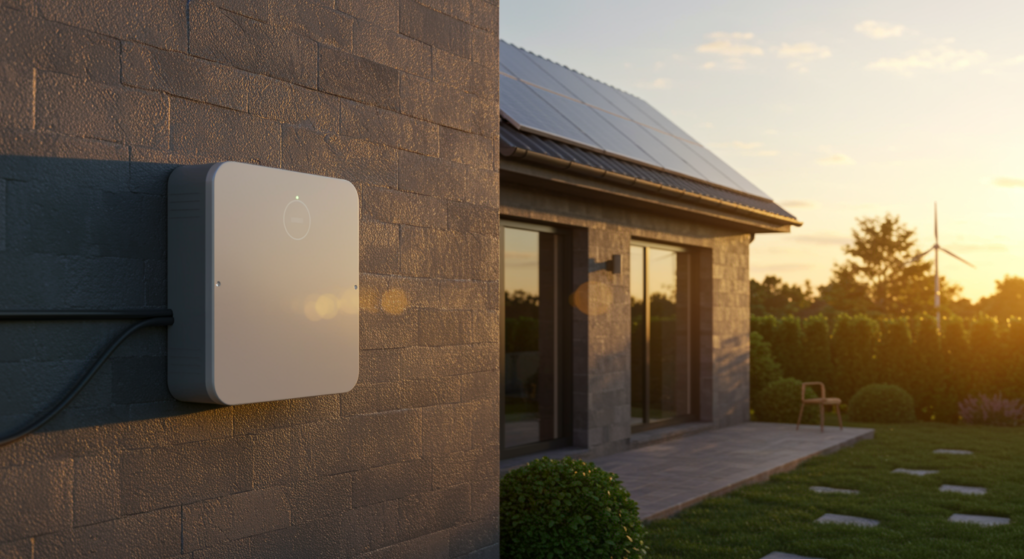
You’ve seen the blue-black shimmer of solar panels on rooftops across your neighbourhood. Maybe you even have them yourself. There’s a quiet satisfaction in knowing that while the sun is out, your home is generating its own energy, reducing reliance on the grid and lowering costs. But then the sun sets. The evening draws in, lights switch on, appliances come to life, and just like that, you’re back to buying electricity—often at the most expensive time of the day.
This is the central limitation of solar alone: timing. Your panels generate the most power when your home needs it least, and your demand peaks when production drops to zero. Without a way to store that energy, much of what you generate is exported to the grid during the day, only for you to buy it back later at a higher price. In simple terms, you’re selling low and buying high.
Understanding the Gap
To understand why battery storage matters, it helps to look at how solar energy flows through a typical home. When sunlight hits your panels, it generates Direct Current (DC) electricity. Your inverter immediately converts this into Alternating Current (AC), which powers your home. If you’re not using that energy in the moment it’s generated, it doesn’t stay with you—it gets exported to the grid.
While export tariffs offer some return, they rarely match the price you pay to import electricity later. Over time, this imbalance limits the financial and practical benefits of solar panels on their own.
How Battery Storage Changes Everything
A battery fundamentally changes this dynamic. Instead of exporting surplus energy, a storage system captures it and holds it for later use. When the sun goes down, your home draws from that stored energy rather than the grid, effectively extending your solar generation into the evening and overnight.
Modern systems—particularly those using Lithium Iron Phosphate (LiFePO4) technology—are designed for efficiency, longevity, and safety. They don’t just store energy; they manage it intelligently, ensuring your home uses its own power first before relying on external supply.
From Energy Tool to Financial Asset
Battery systems in 2026 have evolved beyond simple storage. Many now operate as smart energy management systems, using real-time data to make decisions that benefit the homeowner. They can charge when electricity prices are low, discharge when prices peak, and even prepare for periods of high demand or adverse weather.
This means your battery is no longer just supporting your solar panels—it’s actively working to reduce your energy costs and improve efficiency every day. It effectively becomes a financial tool, helping you navigate fluctuating tariffs and maximise the value of every unit of electricity your system produces.
More Than Savings
While the financial case is strong, there’s another benefit that’s harder to quantify but just as important: control. Energy prices have become increasingly unpredictable, influenced by global markets, policy changes, and demand spikes. For many homeowners, this creates a sense of uncertainty.
Installing a battery shifts that balance. When you can see your home running largely on stored solar energy—even during darker months—you’re no longer fully exposed to those external pressures. It’s not complete independence, but it’s a significant step toward it.
The Practical Reality
For most homes, adding battery storage doesn’t mean going fully off-grid, but it does mean dramatically reducing reliance on imported electricity. Combined with solar panels, a well-sized battery can cover a large portion of daily energy use, particularly when supported by smart tariffs and efficient usage habits.
Working with experienced providers of battery storage installation UK services ensures the system is correctly specified, installed, and configured to suit your property and usage patterns. This is key to getting the most from both your solar generation and your storage capacity.
Final Thoughts
Solar panels changed how we generate energy at home, but battery storage changes how we use it. Instead of being tied to the timing of the sun, you gain the ability to decide when and how your energy is used.
It’s not just about capturing sunlight—it’s about keeping it, using it on your terms, and making your home more efficient, resilient, and future-ready in the process.